Booking System in 2026 – What It Must Actually Do

What we’ve learned from running a booking system since 2024
When we started building Zenamu in earnest, a booking system was basically a digital calendar with a "Book Now" button glued on top. By the start of 2026, the studios we work with want very different things. So do their clients.
A yoga studio in Vienna that joined us in 2024 makes this concrete. Back then, the owner told us her clients still emailed her on Friday afternoon to ask about Sunday classes. By autumn 2025 her DMs on Instagram outnumbered her emails six to one, and the average booking happened at 10:42 in the evening (her words, not ours, she checked). A studio owner who used to track passes in a spreadsheet now wants to know which classes fill up two days in advance, which ones never break 50% capacity, and whether the new instructor is actually retaining the people they bring in. The questions stopped being "can the software handle bookings?" and started being "what is the software showing me that I couldn’t see before?"
What changed between 2024 and 2026
Three things changed noticeably in the studios we work with.
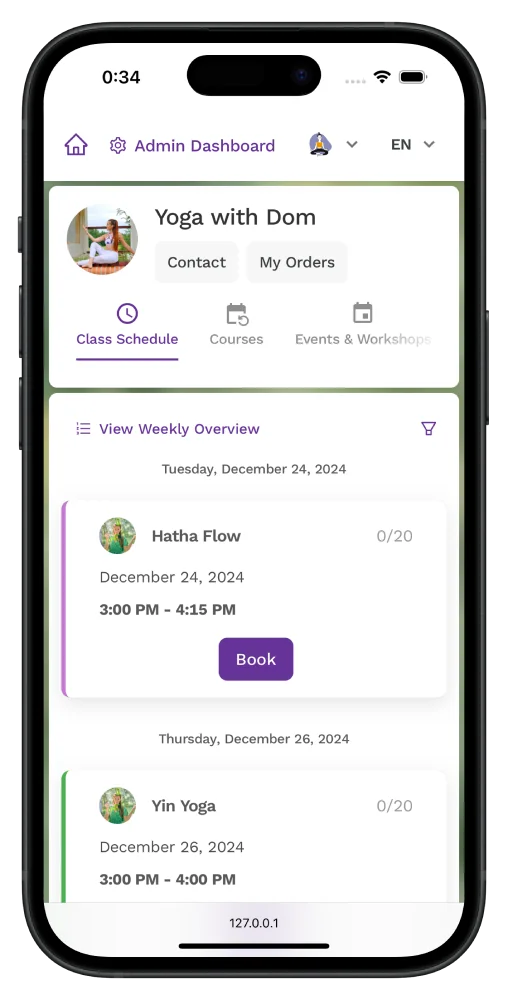
Mobile stopped being a "nice option" and became the dominant booking surface. Well above eight in ten bookings on most accounts now come from a phone. One pilates studio in Prague has dropped to a 4% desktop booking rate, down from roughly 25% two years ago. If a class schedule isn’t readable and bookable on a five-inch screen, it effectively doesn’t exist for most of your audience.
Payments quietly migrated from "pay at reception" to "paid before they walk in." Studios that used to chase unpaid drop-ins now find that the no-show rate drops the moment payment moves upstream of the class. A Brno-based dance school we worked with last spring cut their no-show rate from around 18% to under 7% in two months, simply by requiring card-on-file for prime-time slots. Recurring memberships went from being a niche thing one or two enthusiastic owners experimented with in 2023 to a default that most growing studios offer.
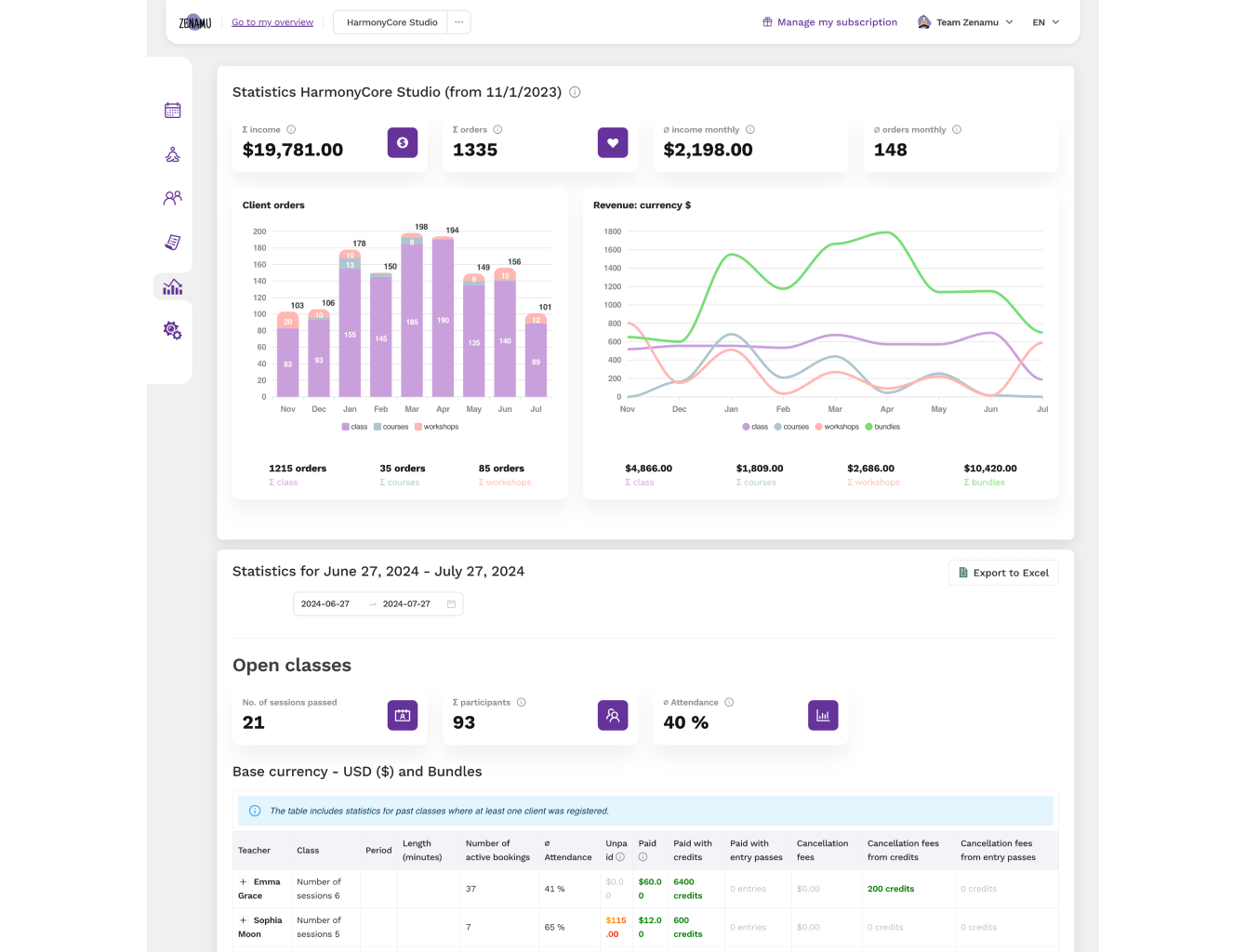
Owners stopped accepting "I don’t really know where my new clients come from." Studios we talk to ask different questions now. Instead of asking about Zapier integrations, they ask about retention by class type. Instead of "can it print a paper receipt?", they ask whether the export will line up with their accountant’s software. A booking system in 2026 is also a small analytics tool: where bookings come from, which classes retain, which times of day are leaking. Once you can see those numbers, going back to gut feel feels like flying with the instruments turned off.
What a booking system actually needs to do in 2026
Stripped down, here’s the short list we’d defend in front of any studio owner.
You need 24/7 mobile-first bookings. The real bar is whether someone can book your Sunday-morning class at 11pm on a Saturday without calling you. You need memberships, passes, and recurring billing handled by the system itself, including expiry, renewals, and partial usage, so the owner doesn’t track this manually. You need honest analytics: occupancy, revenue, retention, source of new clients. Not vanity dashboards, just the few numbers that actually drive decisions. You need automated communication: reminders, confirmations, the occasional follow-up, written in your voice rather than template-speak. And you need no commitments and no surprise fees. You should be able to leave at any point. Anyone who locks you in is solving for themselves, not for you.
Everything else (social sharing, embedded schedule widgets, custom domains, branded emails) is genuinely useful, but it sits on top of those five.
How Zenamu approaches it
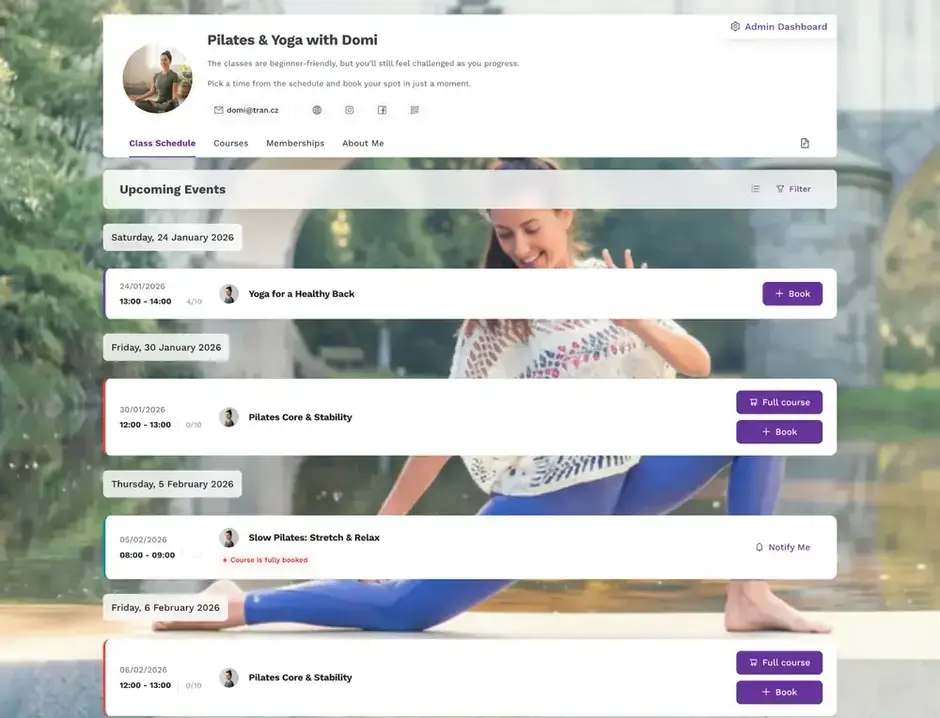
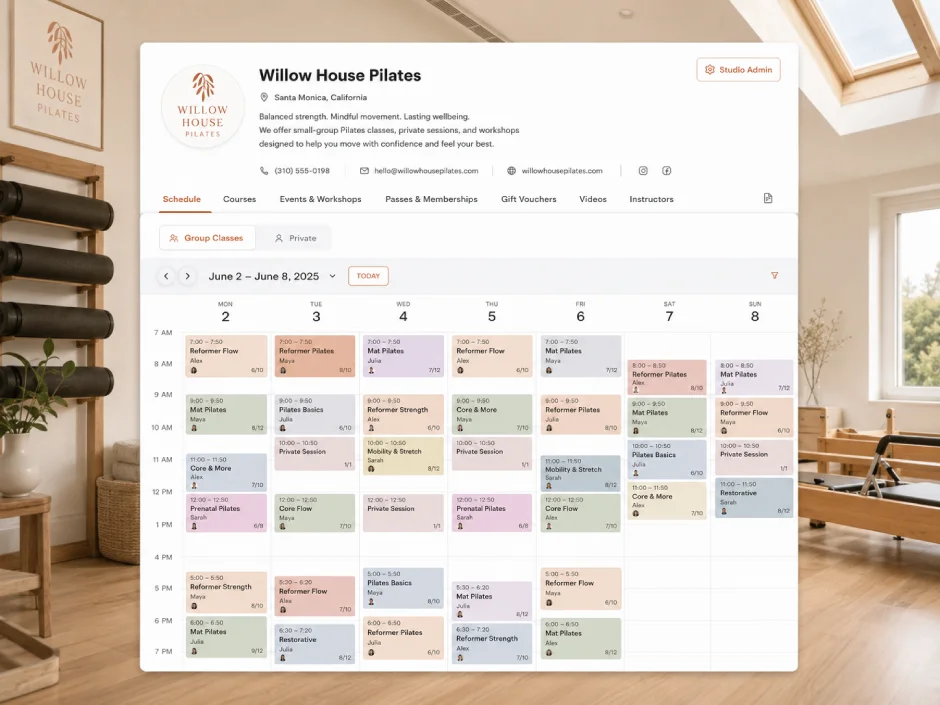
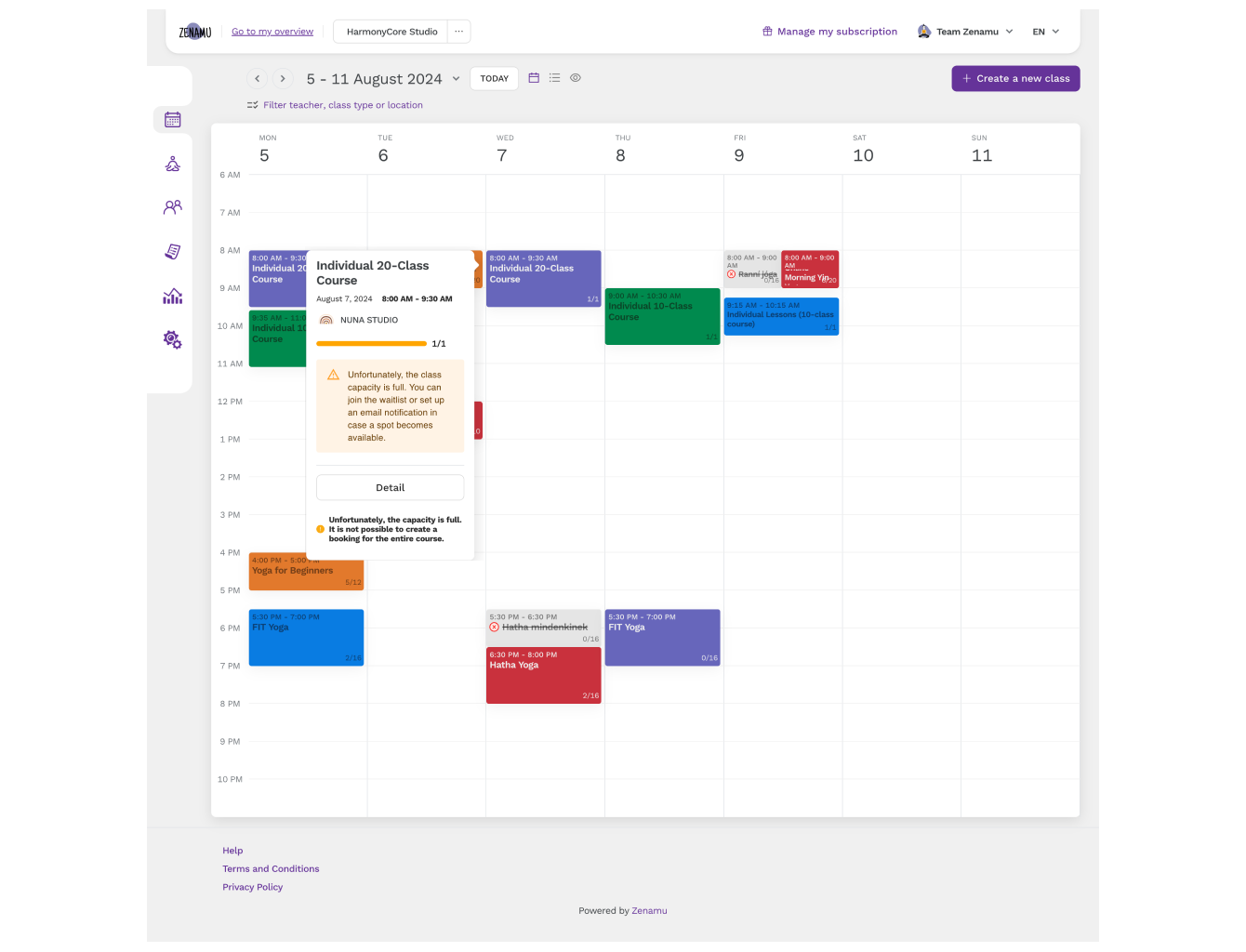
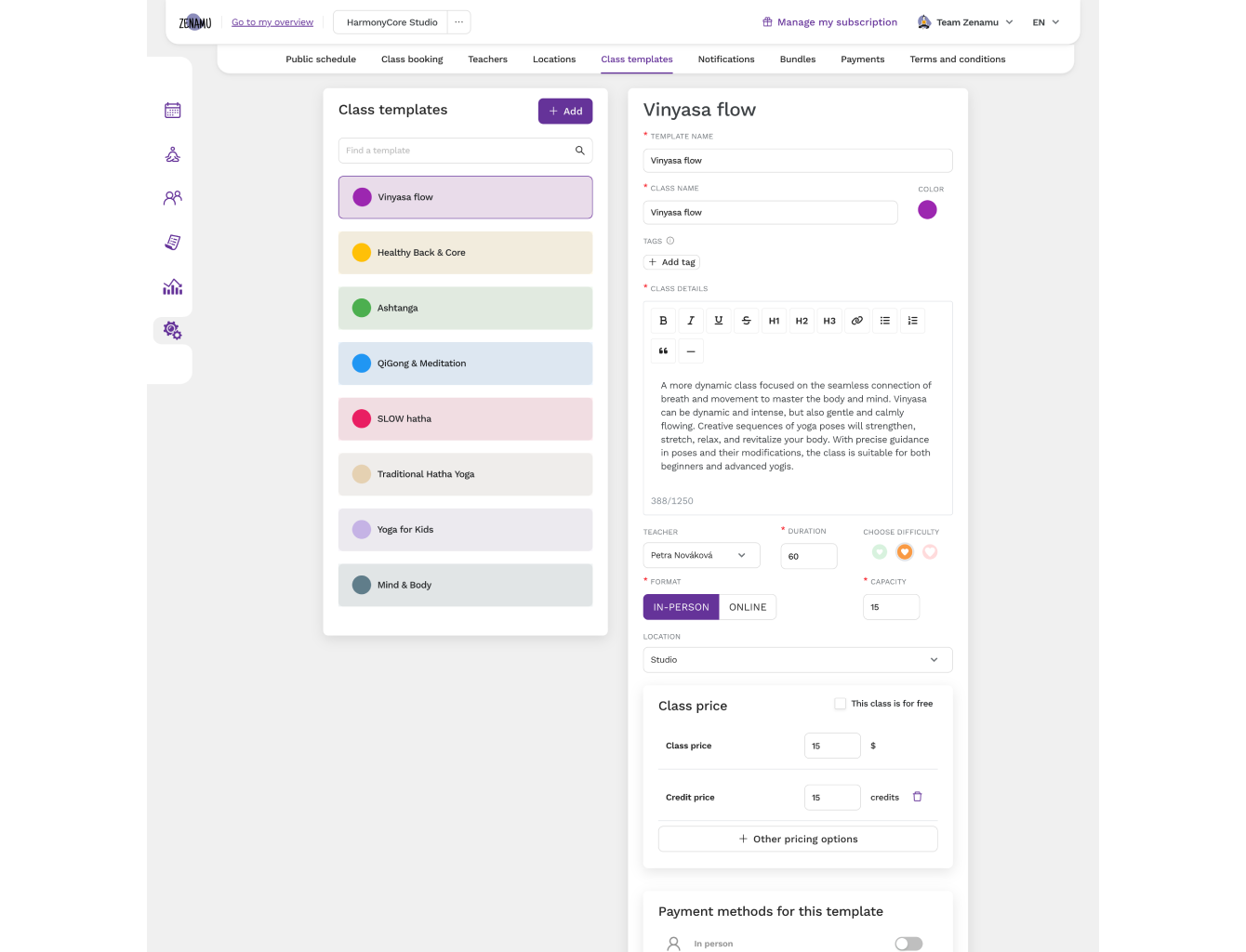
We built the Zenamu booking platform the way we wished a booking system had existed when we were running classes ourselves. Set-up takes minutes rather than evenings, the mobile app works for both the owner and the client without separate tooling, and the analytics surface the things you’d actually act on: occupancy trends, monthly revenue, retention by class type, exports if you want to dig deeper. Newsletter and pixel integrations (Google Analytics, Meta) are there when you need them and out of the way when you don’t.
The bias underneath all of this: a booking system should be invisible most of the time. You notice it when something needs your attention, and otherwise the software gets out of the way so you can teach.
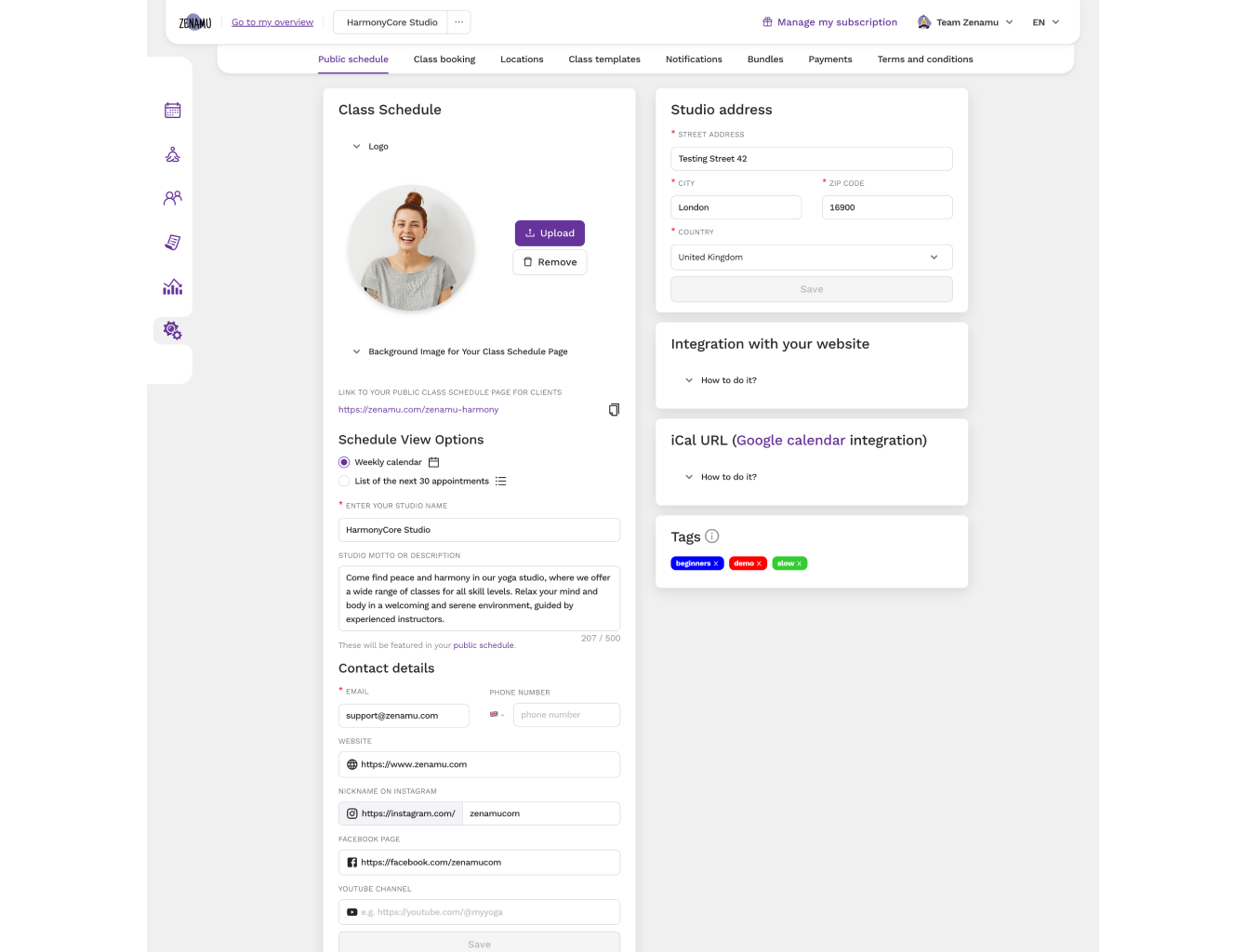
If your current setup is taking more of your week than it gives back, it’s worth a few minutes of your time to see whether 2026’s tooling fits better. You can spin up a free Zenamu account, set up a branded schedule with your logo, and book your first class today. No card, no commitment, no time pressure.

Classes and courses
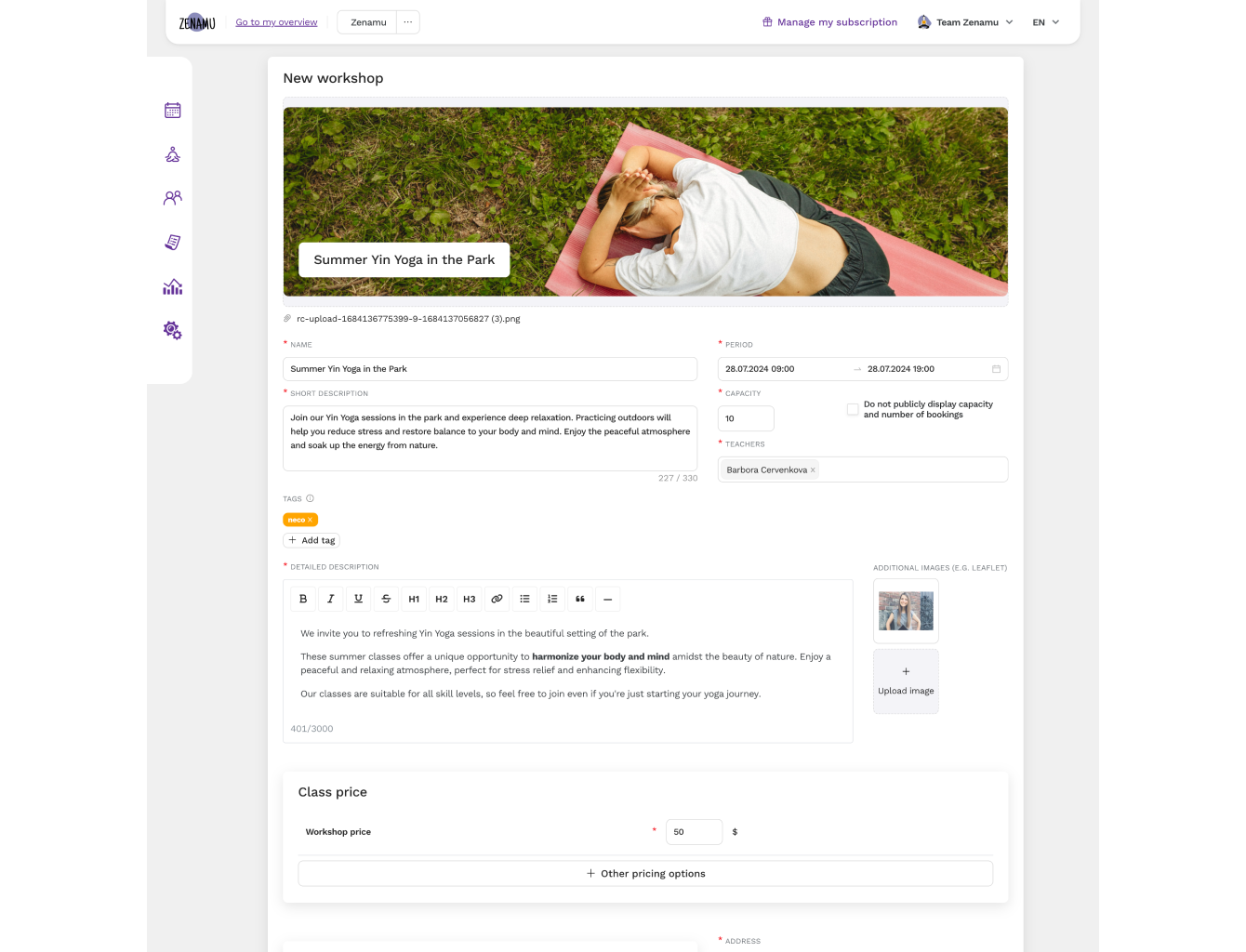
A multi-week course is easier to fill when people commit to the whole run up front. Zenamu collects those enrollments for you, so courses fill up before they start.
Course management that stays simple – with flexible make-up sessions and late enrollment into an ongoing course.
1:1 appointments
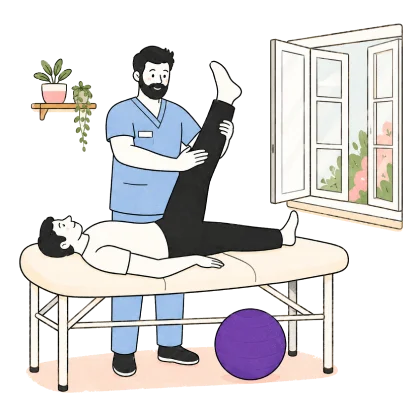
Offer private consultations, training sessions, massages, or therapy. Clients pick a service, a specialist, a time – and book online.
Flexible availability – weekly schedules with even/odd week rotation, plus one-off slots whenever you need them.

Take card or PayPal payments – just connect Stripe or PayPal in a few minutes.
Clients pay their way: card, Apple Pay, Google Pay, or PayPal.

Pick how you want to get paid for your classes – with fast, secure payments built right into the booking flow.
Let clients redeem discount codes, or surprise someone with a gift voucher.

Memberships
Set up memberships your way – unlimited access, or capped by day, week, or month.
Less admin for you, more commitment from your clients. Everyone wins.
Clients pay once, and every booking after that is handled automatically. No more chasing payments.

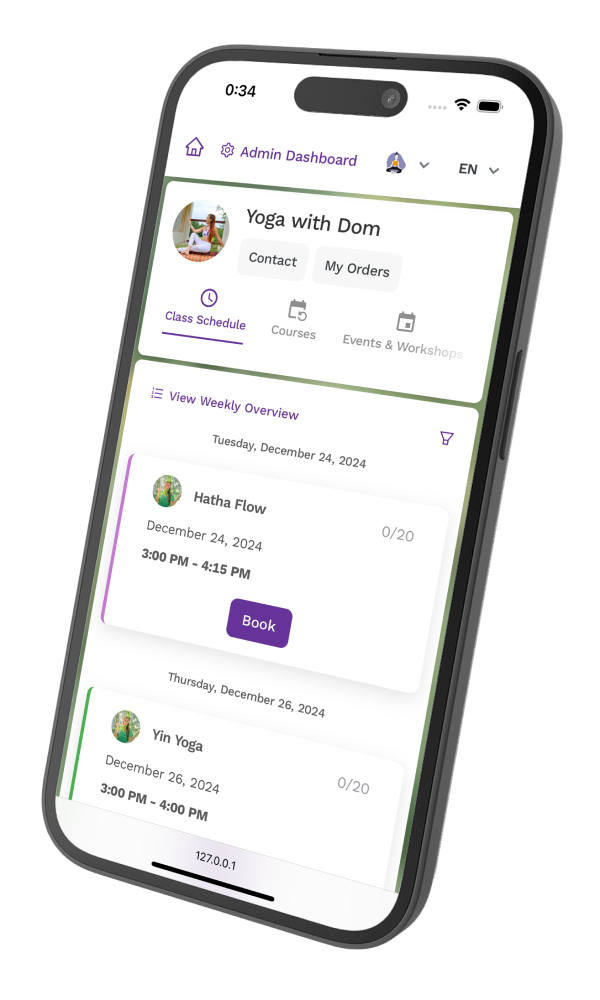


Clients book on their phones. Zenamu is built for it.
Up to 80% of bookings now happen on a phone.
Zenamu is designed with attention to detail and fully responsive, so it works just as well for you as for your clients – on a computer and on a phone.




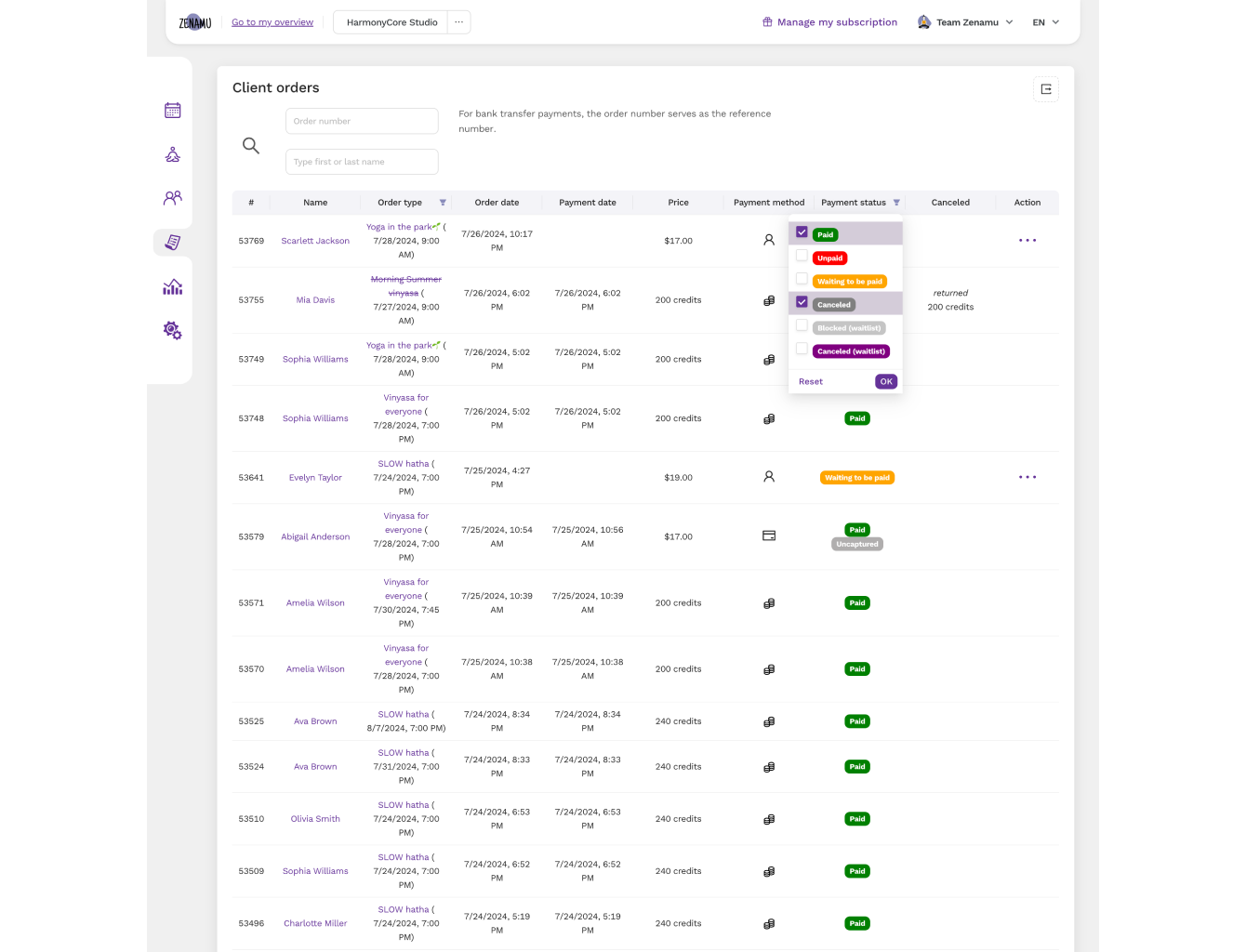
- Orders and payments – Zenamu processes them for you. It watches cancellation policies, manages make-up sessions, and clients see all their orders in one place.
- Notifications – Automatic client emails, waitlists that fill spots on full classes, and payment confirmations sent on their own.
- Underfilled sessions – If a session doesn't reach the minimum you set, Zenamu cancels it in time and tells everyone who booked.
- Client care – Birthday wishes and "we miss you" emails with a gift voucher, sent on their own at just the right moment.
Email marketing integrations · Meta Pixel & Google Analytics 4